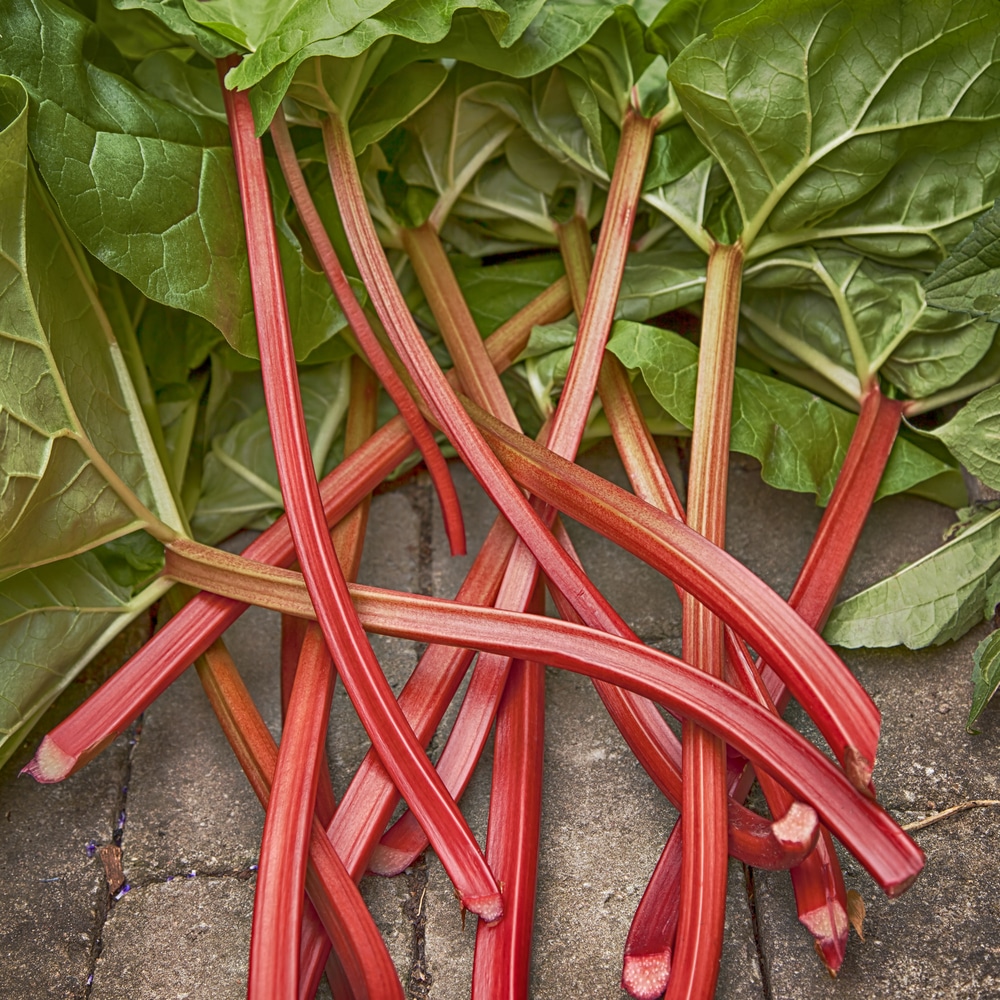
What Not To Look For
There are a lot of ways people use to tell if their rhubarb is ripe that are ineffective and incorrect. Unfortunately, when these methods are used, the harvested rhubarb is not at optimal quality and, in some cases, damage to the plant can result. For these reasons, be aware that you can’t rely on:

- Color: Often, folks expect their stalks to turn red when ripe, but some varieties never do this.
- Planting Date: Just because you planted your rhubarb in April doesn’t mean it is, or isn’t, ripe in June.
- Leaves: While rhubarb leaves will usually be fully open when the stalks are ripe, this is not a reliable indicator that your plant is ready to harvest.
- Season: While rhubarb is ripe throughout the spring and summer, there are other factors indicating optimal ripeness.
When Your Rhubarb Is Ripe
So, while you’re ignoring color and age of plant, time of year or condition of leaves, how are you supposed to know when your rhubarb is ripe? It’s simple; just measure.
Rhubarb that is ripe (and ready to pick) is at least seven inches tall, although waiting until it’s ten inches is better. You’ll want to cut or pull your stalks before they reach over 15 inches tall, as well. For the best texture and taste, rhubarb that is between seven and 15 inches high is at its peak.
When You Harvest Too Early or Too Late
Aside from getting immature, unripe rhubarb stalks if you harvest too soon, harvesting early can mean damage to your plant and could cause it to fail. Premature cutting of stalks can result in damaged, decaying stems; this can lead to root rot and even plant death.

Waiting too long to cut your stalks isn’t good, either. As summer ends and fall begins, your plants need their nutrients and energy to survive the winter. Allowing your rhubarb to grow past peak ripeness will divert the plant’s resources to continued growth of stalks; this could result in the plant dying during the winter.
Knowing when your rhubarb is ripe and ready to harvest is vital to your plant’s well-being, optimal flavor from your stalks, and the plant’s longevity. Keep your tape measure or yardstick handy all summer long and be sure your rhubarb is ripe for the picking!